⚠️ Article updated on 10 October 2026: the directive's transposition deadline of 29 May 2026 has passed. Since then, the order (arrêté) of 11 June 2026 on the DPE has been published in the Journal officiel of 13 August 2026. From 1 January 2027, it adds an "A0" mention and new information, notably on renewable energy, to the DPE of homes in mainland France, without changing the classes. The rest of the transposition is still in progress. Details in the section "What has been published since May 2026".
A stubborn rumour has been circulating since 2024: "Brussels is going to replace the DPE with a European standard", "the A-to-G ratings will disappear", "Europe will force you to renovate your home". None of these claims is accurate. Directive (EU) 2024/1275, known as the EPBD recast (Energy Performance of Buildings Directive), entered into force on 28 May 2024 and was due to be transposed into French law by 29 May 2026 at the latest. It sets a European course — a zero-emission building stock by 2050 — but leaves each member state free to choose the means.
For a French homeowner, the real question is not "what is Europe deciding for me?" but "what actually changes for my DPE (Diagnostic de Performance Énergétique — the French Energy Performance Certificate), my heating and my obligations?". The answer is more nuanced than the alarmist headlines: a great deal moves at the framework level, very little changes in the DPE as you know it in the short term. Here is the factual breakdown, point by point, sourced from the directive itself.
Transposition due by 29 May 2026, still partial in France as of 10 October 2026 — Directive (EU) 2024/1275 leaves member states to set their own thresholds and trajectories. The European residential target: cut the average primary energy use of the stock by at least 16% by 2030 and by 20% to 22% by 2035 (relative to 2020).
What this article covers
The legal framework of Directive (EU) 2024/1275 and its transposition timetable, the definition of the zero-emission building (ZEB) and its deadlines for new construction, the renovation trajectory of the residential stock (2030/2035) and the minimum standards for non-residential buildings (2030/2033), the renovation passport, the end of subsidies for fossil-fuel boilers and their phase-out by 2040, and above all: what changes — or does not — for the French DPE and your obligations as an owner.
The framework: what the EPBD 2024/1275 directive is (and isn't)
Directive (EU) 2024/1275 of the European Parliament and of the Council of 24 April 2024 is a recast of the Energy Performance of Buildings Directive: it replaces Directive 2010/31/EU. Published in the Official Journal of the European Union, it entered into force on 28 May 2024 and was due to be transposed by member states by 29 May 2026 at the latest. Its final objective is explicit: a zero-emission European building stock by 2050.
A point of vocabulary is essential to avoid mistakes. A European directive is not a regulation: it does not apply directly to citizens. It sets results to be achieved and requires member states to translate them into national law — here through French laws, decrees or orders (arrêtés). The deadline expired on 29 May 2026: see below for what has been published since. The directive leaves significant room for manoeuvre: member states "are free to choose which buildings to target and which measures to take" to meet the trajectories set.
Why the French DPE is not "replaced" by Europe
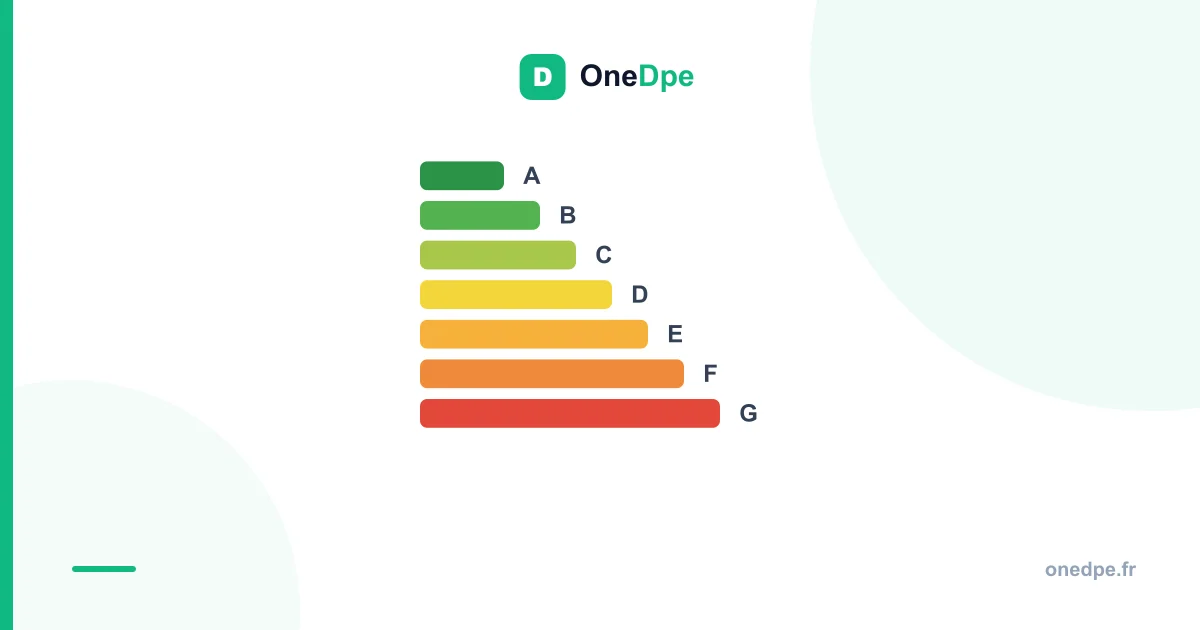
The directive harmonises energy performance certificates at European level (the EPC — Energy Performance Certificate), of which the DPE is the French version. It imposes a closed A-to-G scale and a common certificate template (Annex V), but it does not dictate each country's calculation method. France keeps its 3CL-DPE 2021 method (the conventional calculation method for dwellings' energy use) and its A-to-G ratings. What the directive changes first is the content shown on the certificate — not the existence of the classes you know. In France, that is the purpose of the order of 11 June 2026 on the DPE, which applies to certificates issued from 1 January 2027.
⚠️ Warning: "directive" does not mean "immediate application". Directive (EU) 2024/1275 was due to be transposed by 29 May 2026. Even with that deadline past, none of its objectives is directly enforceable against a homeowner: only the French texts that transpose it are. The obligations that apply to you today remain those of French law in force (Climate & Resilience Act, Construction and Housing Code).
What has been published since May 2026
For the DPE, the directive's part on certificate content has a first French text. It is the "Arrêté du 11 juin 2026 portant diverses dispositions d'adaptation au droit de l'Union européenne sur le diagnostic de performance énergétique", an order adapting the DPE to EU law. It was published in Journal officiel no. 0188 of 13 August 2026 and applies to certificates issued from 1 January 2027. Beware of the namesake: another order of the same day deals with MaPrimeRénov' (the French national energy renovation grant).
It amends the text that sets the content of the residential DPE in mainland France; these new features therefore do not apply in the French overseas territories. It adds three sets of information:
- an "A0" mention. For a certificate on an existing home, it requires an A or B label and energy that is all renewable (on site or nearby), electric or from an efficient heating or cooling network. No heating or hot-water installation may be liable to use fossil energy on site or nearby;
- the renewable energy produced on site, in kWh and as a share of consumption, as well as the home's main energy carrier;
- an assessment of the remaining lifespan of the heating system (and of air conditioning), the home's flexibility and whether its emitters can run at low temperature.
"A0" is not a new class: a home rated B that carries the mention is still rated B. The seven classes and their thresholds do not change. The order does not revise certificates already issued: they remain valid until their end date (see the validity period of the French EPC).
The directive, for its part, speaks of classes. Its article 19 requires, by 29 May 2026, a closed scale from A to G in which A stands for zero-emission buildings. Member states that already designated such buildings as "A0" on that date may keep that designation. An A+ class is optional. A member state that revised its classes on or after 1 January 2019 and before 28 May 2024 may postpone the revision until 31 December 2029. As of 10 October 2026, no French text changes the class thresholds.
The rest of the transposition goes through decrees or through legislation. The bill adapting French law to EU law was passed by the Senate on 18 February 2026. As of 10 October 2026, it has been referred to committee at the Assemblée nationale.
The mechanism: European objectives and national rollout
The heart of the directive lies in a few quantified trajectories. Understanding how they fit together makes it possible to tell what will genuinely apply to French homes from what is a national choice.
The residential stock trajectory: an average target, not an individual ban
For residential buildings, the directive does not set a minimum standard building by building. It requires each member state to establish a national trajectory reducing the average primary energy use of the stock: by at least 16% by 2030 and by at least 20% to 22% by 2035, relative to 2020. The directive specifies that at least 55% of this decrease must come from renovating the worst-performing buildings — in other words, the effort targets thermal sieves first.
This is a major difference from what circulates in the media. The idea that "all homes must be rated E by 2030, then D by 2033" corresponds to proposals discussed during negotiations — minimum energy performance standards (MEPS) applied to housing — that were not retained in that form for dwellings. The adopted text turned these individual residential thresholds into a national average target, leaving each country to decide how to reach it.
Non-residential: real minimum thresholds, this time
For non-residential buildings (offices, shops, commercial premises), the directive does introduce genuine minimum energy performance standards (MEPS), based on nationally determined thresholds. The aim: to trigger the renovation of the worst-performing 16% of non-residential buildings by 2030, then the worst-performing 26% by 2033. These obligations do not concern housing, but they illuminate the overall logic: Europe tackles the most energy-hungry buildings first.
The zero-emission building (ZEB): for new construction, not the existing stock
The directive creates the status of zero-emission building (ZEB): a very high energy-performance building producing no on-site carbon emissions from fossil sources. This standard becomes the norm for new construction: from 1 January 2028 for new buildings owned by public bodies, and from 1 January 2030 for all new buildings. Existing buildings are not required to become ZEBs; it is the more gradual renovation trajectory of the stock that concerns them.
Key point on ZEB: the "zero-emission" standard applies to new construction (2028 public, 2030 general). If you own an older home, you are not required to turn it into a zero-emission building — it is the gradual renovation of the stock, steered by France, that will define any obligations on you.
Fossil heating, renovation passport, solar: the other levers
Beyond ratings and trajectories, the directive acts on equipment and support tools. Three measures deserve the attention of any owner preparing works.
The end of subsidies for fossil boilers — and the phase-out by 2040
Since 1 January 2025, member states can no longer grant financial incentives for installing stand-alone boilers powered exclusively by fossil fuels. This is consistent with the French trend: in 2026, MaPrimeRénov' (the French national renovation grant) no longer funds the installation of a gas boiler on its own. Beyond that, the directive sets a policy course: the gradual phase-out of fossil-fuel boilers by 2040. This is not an immediate ban on using your existing boiler, but the signal is clear for anyone who has to replace a heat generator: the heat pump and connection to a heat network become the supported routes.
The renovation passport: a step-by-step roadmap
The directive required each member state to set up, by 29 May 2026 at the latest, a building renovation passport scheme. This is a voluntary document that gives the owner a multi-year, step-by-step roadmap to renovate their home towards high performance without getting the order or timing wrong. In France, this tool is close in logic to the regulatory energy audit and to the support of a Mon Accompagnateur Rénov' (the approved supervisor) already in place in the full-scale renovation route.
Solar deployment on buildings
The directive provides for the gradual installation of solar equipment (photovoltaic or solar thermal) on suitable buildings, on a timetable extending to 31 December 2029 at the latest for certain categories. New buildings must also be "solar-ready" — designed to be able to host a solar installation. Here again, new construction and large buildings are targeted first; the existing detached house is not directly required to install solar.
What changes vs what does not for your DPE
Here is the summary table every homeowner should keep in mind. It separates what is a real change from what is media fantasy.
| Topic | What changes (EPBD framework) | What does not change (French DPE) |
|---|---|---|
| A-to-G ratings | Common certificate template; in mainland France, an "A0" mention and new information on the DPE from 1 January 2027 | The A-to-G classes and the 3CL-DPE 2021 method remain in force |
| Residential housing | Average reduction target for the stock (−16% by 2030) | No minimum standard imposed building by building by the EU |
| New construction | Zero-emission building (ZEB) required from 2030 (2028 public) | Not applicable to existing stock: your older home need not become a ZEB |
| Heating | End of subsidies for 100% fossil boilers (2025), phase-out targeted 2040 | Your existing boiler is not banned overnight |
| Tools | Renovation passport, to be set up by 29 May 2026 under the directive | Energy audit and Mon Accompagnateur Rénov' already operational in France |
| Rental-ban timetable | Not set by the EPBD | Still governed by the Climate & Resilience Act (in mainland France: G in 2025, F in 2028) |
The most important point is in the last row. The timetable banning the rental of thermal sieves — in mainland France, dwellings rated G banned from rental since 1 January 2025, F from 1 January 2028 — comes from French law, namely the Climate & Resilience Act of 22 August 2021 (Law No. 2021-1104), and not from the European directive. The EPBD sets no rental ban; it is France that steers this timetable, and it is this timetable that applies to you today.
Key takeaway: the directive does not by itself create any obligation for your home, even after the 29 May 2026 transposition deadline. Your current constraints — DPE rating, rental timetable, subsidy conditions — stem from French law. The directive sets the course; France writes the applicable rules.
Check your actual DPE rating first
Before worrying about European trajectories, start from your real situation: enter your diagnosis's ADEME number and the OneDpe DPE checker verifies your rating's consistency, detects calculation inconsistencies, and places your home against the applicable rental thresholds (in mainland France: G in 2025, F in 2028). You will know whether your property is affected by the French deadlines before even reasoning at the scale of the European stock.
To go further: the guide to DPE classes from A to G and the 2026 electricity coefficient reform.
Conclusion
The EPBD 2024/1275 directive marks a real step towards decarbonising the European building stock, but it does not overturn the French DPE in the short term. The A-to-G ratings remain, the 3CL-DPE method remains, and it is still the Climate & Resilience Act that sets the rental-ban timetable that concerns you. What changes relates mainly to new construction (zero-emission building), equipment (end of subsidies for fossil boilers, 2040 horizon) and tools (renovation passport). For the certificate itself, the order of 11 June 2026 on the DPE takes over part of the directive's provisions on certificate content from 1 January 2027. The rest of the transposition, due by 29 May 2026, is still in progress.
Rather than reacting to abstract stock-level trajectories, the right approach remains individual: know your home's exact rating and anticipate the deadlines that apply to it. The OneDpe DPE checker gives you that reliable starting point, in connection with the mainland timetable (F in 2028) which, for its part, is already positive law.