Guides, regulations and tips on the energy performance certificate (DPE) and renovation.
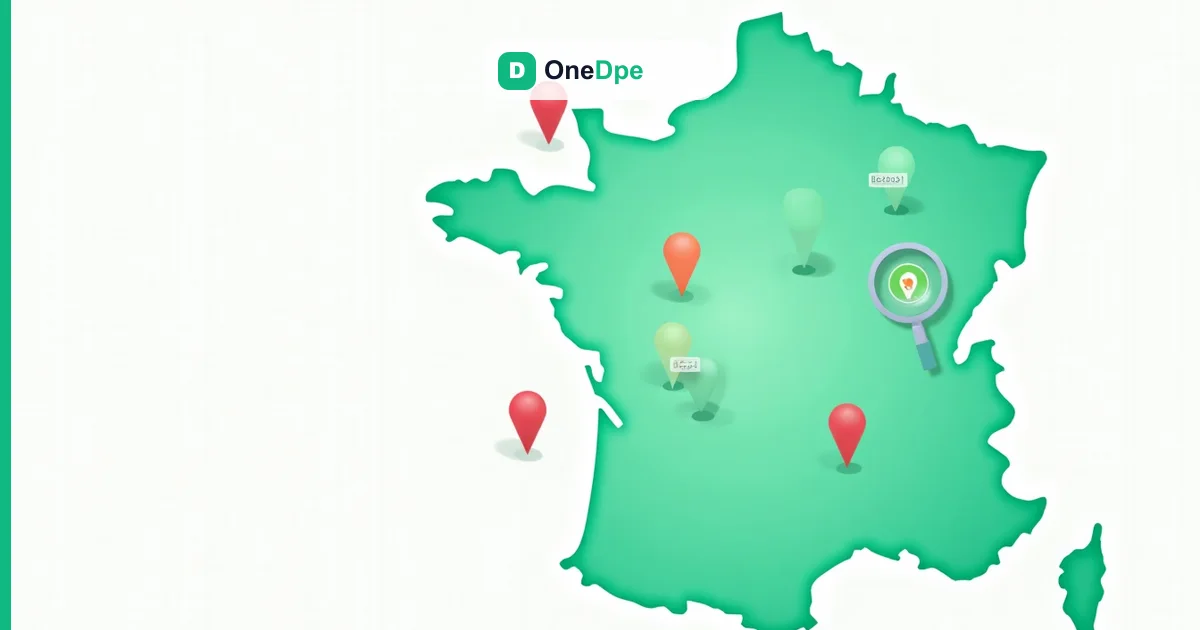
Our analysis of 16 million EPCs reveals the French departments where statistically suspect certificates concentrate. Cluster map, method and how to check yours.
Selling a home soon after supported works: when must you repay MaPrimeRénov'? The role of the rental commitment, the landlord case, and the distinction from CEE and the eco-PTZ loan, sourced from ANAH and France Rénov'.
Moving from F to D on the DPE/EPC: works-bundle scenarios by property type (old house, recent house, flat), with ADEME cost ranges and 2026 subsidies (MaPrimeRénov' full-scale, CEE).
Total-cost comparison over 15 years: heat pump, condensing gas boiler and heat network. Installation, consumption, maintenance, 2026 grants and the real impact on the EPC.
External (ITE) or internal (ITI) wall insulation: performance, thermal bridges, cost (ITE often close to double ITI), loss of space, façade constraints and 2026 subsidies. How to choose, and why wall insulation is no longer funded as a single action.
Two orders of 17 August 2026 take effect on 1 September: the whole-home CEE grant narrows to homes rated E, F or G with no fossil-fuel equipment, while low-carbon hot water gains four months of top-ups.
Insulating the envelope before the heating: why the order of energy-renovation works decides equipment sizing, performance and ROI. Never the heat pump before insulation.
The primary-energy conversion factor for electricity moved from 2.3 to 1.9 on 1 January 2026, and the order of 19 August 2026 takes it to 1.7 on 1 January 2027. We counted 392,948 EPC-assessed homes out of the energy-sieve bracket with no works done — and 604,669 that nothing will take out of it.
Phone, email, SMS, social media: marketing approaches about energy renovation are banned in France — and not only since 11 August 2026. What the law really says, and your remedies.
Which works gain one DPE/EPC grade with the best ROI? Loft and wall insulation, windows, heat pump, ventilation: ADEME costs, 2026 subsidies and indicative impact on the rating.
The French EPC has two labels: energy (kWh PE/m²/year) and climate (kg CO₂/m²/year). The class kept is the worse one. Why gas stays F/G and electric gains with the 1.9 coefficient.
Who carries out your EPC, what it really costs (unregulated price, €100-250) and how to choose a reliable COFRAC-certified assessor without overpaying.
A French EPC is valid for 10 years… but not all of them. Validity regimes, EPCs expired on 31 December 2024, free certificate vs new assessment, when to redo your EPC.
In 2023, 0.08% of French energy certificates were audited; England and Wales audit 2%. Two different architectures — and what the 2024 European directive changes for both.
The 13-character ADEME number proves a DPE is registered with the Observatory. Where to find it, what it guarantees, and how to verify a DPE's authenticity.
The 3CL-DPE 2021 method explained for everyone: a conventional calculation (not a measurement), the five uses, primary vs final energy, and why the EPC differs from your bills.
OneDpe barometer on 11.2 million EPCs: 40.2% of homes are rated "insufficient" for summer comfort, and 46.5% would be if the rule were applied to the letter. The official indicator points to the North; adding climate and the urban heat island, the South and Paris move ahead.
Learn to read an EPC from start to finish: dual label, annual costs, consumption breakdown, building description, works, summer comfort, ADEME number and validity.
"A new letter, for summer comfort": announced on 15 July 2026, no text published. What we know about the future DPE letter, what stays open, and what already changes for your home — 5.5% VAT on fixed reversible air conditioning, guided-pathway subsidies.
We analysed 689,279 French energy certificates (DPE): about 1 in 9 carries a major inconsistency. Flats, A/B classes and recent builds concentrate the anomalies. Barometer and map.
DPE explained: what the French Energy Performance Certificate is, what it contains, how it is calculated (3CL), what it is for and what changes in 2026.
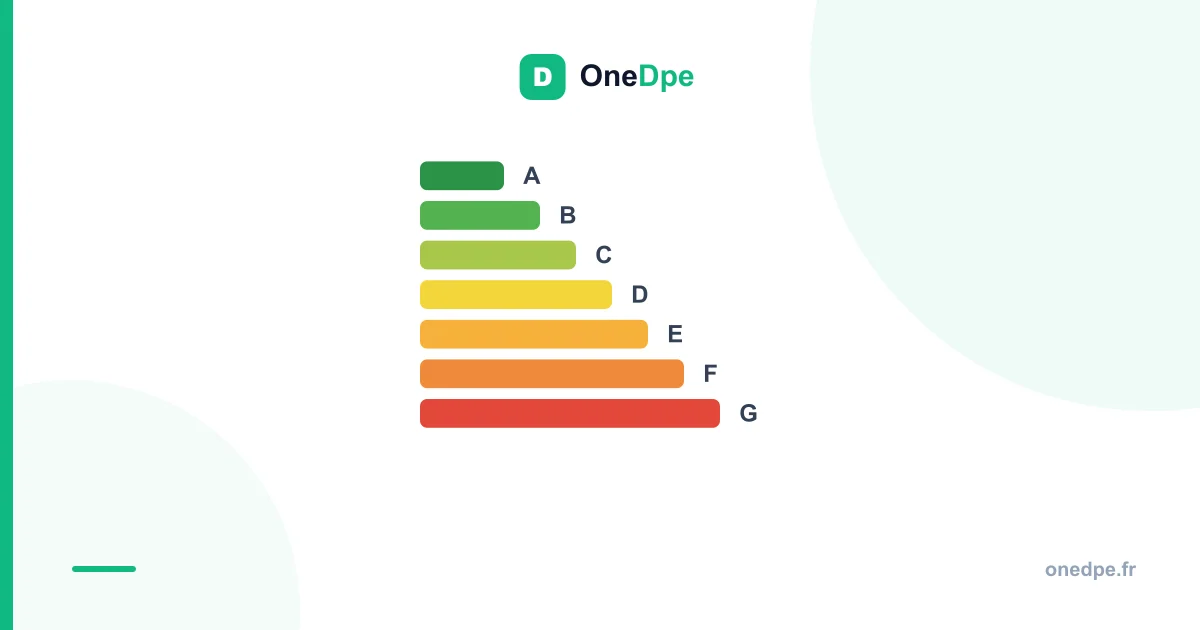
The complete guide to EPC classes A to G in 2026: primary-energy and CO₂ thresholds, the worse-of-the-two rule, rental bans and the effect of the 1.9 coefficient.
Directive (EU) 2024/1275 (EPBD recast), transposition by 29 May 2026: A-to-G ratings kept, zero-emission building, 2030/2035 trajectory, end of fossil boilers. A factual, sourced review of what changes — or not — for the French DPE.
One year after the Létard plan: a 1,000-DPE-a-year cap, a blacklist of assessors, controls raised to 10,000 a year, ADEME's AI detection, a mandatory QR code and the Labaronne report on framing the profession. What changes for owners — and what our data already measure.
Electricity coefficient 2.3 → 1.9 in 2026, then 1.7 for certificates issued from 2027, free label update, 10-year validity, summer comfort 2028: should you redo your DPE now or wait? The decision tree depending on whether you want to sell, let or occupy, with a worked case.
Nearly a million real sales reveal the F/G energy-sieve discount, city by city. Map by department, town ranking and comparison with the Notaires' green value.
In 2028, class-F homes will be banned from rental. We estimate 722,000 rented homes affected, including 93,000 in Paris. Map of the most exposed cities.
Notaires de France "green value" study: a G house sells -25% vs D, a G flat -12%. Discount by class, house/flat gaps, regional variations and the 2026 trend as rental bans approach.
Insulation, glazing, heating, condominium: without proof, the assessor applies penalising default values. The full checklist of documents to gather before your DPE inspection.
Does the DPE/EPC protect tenants from heatwaves? Summer comfort indicator (qualitative, page 2), why a good winter rating does not guarantee a cool home, the 2028 reform (PNACC-3, degree-hour method), tenant rights and the works that really cool a home.
An EPC's price is unregulated (€100-250) but does not predict its reliability. What the data shows, what actually matters, and 5 checks to choose an assessor.
On 1 January 2026, the French DPE electricity coefficient dropped from 2.3 to 1.9 (order of 13 August 2025, published 26 August 2025). The government announced around 850,000 homes leaving classes F and G without works; the SDES puts it at about 700,000.
The EPC label measures winter, not summer. 2021 indicator, "summer comfort letter" announced in 2026, 5.5% VAT on air con, at-risk homes, works and subsidies: what to check on your certificate.
France's DPE electricity coefficient dropped from 2.3 to 1.9 on 1 January 2026: around 850,000 homes change class with no renovation work. Step-by-step guide to ADEME's free certificate, its legal value, the cases where it changes nothing — and how to simulate your new rating before applying.
52,000 renovation fraud reports in 2025 and a scheme reopened in February 2026: illegal cold-calling, mismatched RGE certification, hidden subcontracting... The 7 signs of a MaPrimeRénov’ scam and the free checks to run before signing.
Reopened on 23 February 2026 with €3.6 billion, mandatory France Rénov' appointment, wall insulation removed from the single-action route, lower grant levels: what changes in 2026 and how to file an error-free application.
Which properties to buy and which renovations to do in 2026 to maximise DPE capital gains. Regional discounts, cost/DPE-class ratios, subsidy matrix by legal status, costed case study in Le Mans, and the four pitfalls that destroy net margin.
AI is transforming the EPC: predictive estimation, error detection, property decision support. What already exists in 2026 — and what remains to be built.
In LMNP, a property rated F or G creates obligations that interact with depreciation-based taxation. What the EPC changes — and doesn't change — for furnished landlords.
The EPC in French overseas territories follows specific rules adapted to tropical climates. Timeline, calculation method, obligations, and strategies for overseas property owners.
EPC F or G: acquisition discount, renovation obligation before resale, reduced VAT options. Operation balance sheet, taxation and resale valuation for property dealers.
In condominiums, collective and individual EPCs coexist but produce distinct legal effects. Obligations, class divergences and consequences for landlords, sellers and buyers.
A property rated F or G can lead to mortgage refusal, reduced loan amounts or mandatory renovation clauses. What banks actually assess — and how to prepare.
An inaccurate EPC can cost tens of thousands of euros to the buyer or landlord. Diagnostician liability, types of damages, amicable and judicial remedies.
In a condominium, the multi-year renovation plan doesn't guarantee your unit will go from F to D before 2028. What every landlord-owner needs to check — and do.
The rental ban for class-E properties isn't until 2034 — but several situations may force you to act well before that. Find out if you're affected and simulate the impact with OneDpe.
Inheriting a class F or G property in France means inheriting its constraints. Inheritance tax on full value, inflated partition payments, blocked joint ownership: what nobody tells you before you sign.
Every year, 70,000 suspicious DPEs are flagged in France. Discover the 7 concrete signs any non-specialist can verify in 30 minutes to detect a sloppy or fraudulent energy performance certificate.